Guide to Refurbished Endoscopy Equipment | UAE & Worldwide provides a practical way for hospitals, clinics, diagnostic centers, and gastroenterology departments to access reliable endoscopy technology while managing their equipment budgets. However, purchasing refurbished medical equipment is very different from buying ordinary used electronics. Refurbished endoscopy equipment requires careful evaluation of its condition, image quality, functionality, service history, compatibility, safety, and maintenance requirements. Choosing a trusted medical equipment supplier and properly inspected refurbished systems can help healthcare facilities obtain dependable technology while reducing the overall cost of endoscopy equipment.
The condition of the endoscope, service history, image quality, leak integrity, compatibility, refurbishment process, documentation, warranty, and after-sales support can all affect the long-term value of the equipment.
For healthcare facilities in Dubai and across the UAE, there is also an additional consideration: equipment procurement should fit the facility’s regulatory, maintenance, infection-control, and documentation requirements. Dubai Health Authority standards specifically address medical equipment lifecycle management, including acquisition, installation, preventive maintenance, breakdown maintenance, inventory, tracking, risk management, and recalls.
For international buyers, the same principle applies: the equipment should be evaluated not only by price, but also by technical condition, regulatory requirements in the destination country, compatibility, serviceability, and supplier reliability.
This guide explains what refurbished endoscopy equipment is, why healthcare facilities consider it, what to inspect before purchasing, and how to choose a dependable supplier.
What Is Refurbished Endoscopy Equipment?
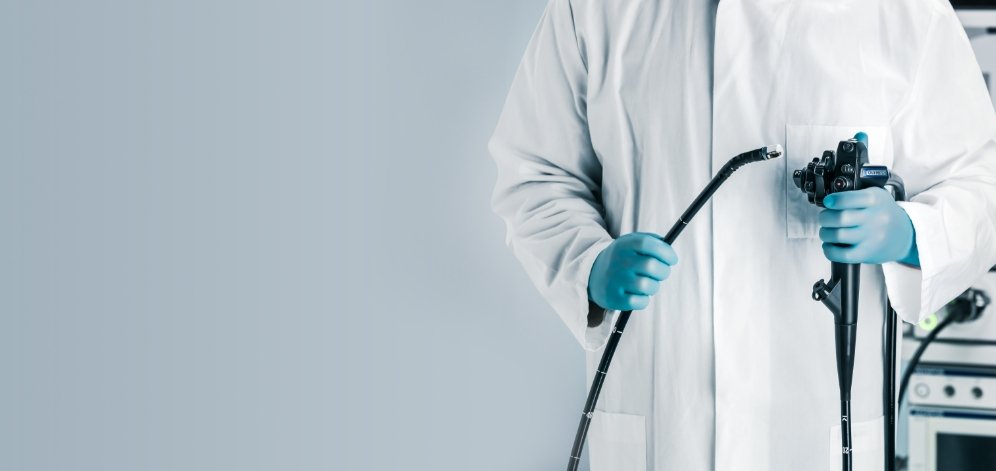
Refurbished endoscopy equipment is previously used medical equipment that has undergone a defined process of inspection, servicing, repair, testing, and quality checking before being offered for resale.
It is important to understand that “used,” “pre-owned,” “reconditioned,” and “refurbished” do not necessarily mean the same thing.
A used endoscope may simply be resold in its existing condition. A refurbished endoscope, on the other hand, should have undergone technical evaluation and corrective work appropriate to its condition.
The exact refurbishment process varies between suppliers. Buyers should therefore ask:
Where Reliability Meets Value in Refurbished Endoscopy & Laparoscopy Systems
- What was inspected?
- What components were repaired or replaced?
- Was the scope leak tested?
- Was the optical system tested?
- Were angulation and control functions checked?
- Was the working channel tested?
- Was image quality evaluated?
- Was the equipment tested with its compatible processor and light source?
- Is a service or inspection report available?
- What warranty or checking period is provided?
For example, Olympus describes its Certified Pre-Owned program as offering fully refurbished endoscopy equipment and states that its equipment undergoes inspection and a rigorous refurbishment process.
The important lesson is simple:
Do not judge refurbished equipment by appearance alone. Judge it by the quality and transparency of the refurbishment process.
Why Consider Refurbished Endoscopy Equipment?
The biggest reason healthcare providers consider refurbished equipment is usually value.
A new endoscopy system can represent a significant capital investment, particularly when a department needs multiple scopes, processors, light sources, monitors, pumps, accessories, and other supporting equipment.
A properly refurbished system can potentially provide access to established technology at a lower acquisition cost.
1. Lower Initial Investment
Refurbished equipment can reduce the initial capital requirement compared with purchasing equivalent new equipment.
This can be particularly useful for:
- New gastroenterology departments
- Private hospitals
- Diagnostic centers
- Day surgery centers
- Clinics expanding their endoscopy services
- Healthcare facilities replacing older equipment
- Facilities requiring additional scopes for higher procedure volumes
However, price should never be the only purchasing criterion.
A very low price may indicate missing documentation, significant wear, inadequate testing, incompatible components, or future repair costs.
2. Access to Established Endoscopy Platforms
Healthcare facilities sometimes prefer a particular endoscopy platform because their clinical teams are already familiar with it.
A refurbished system may allow a facility to continue using an established platform instead of completely changing its workflow.
This is particularly important when compatibility between the processor, light source, monitor, and endoscope needs to be maintained.
Some older systems may also remain useful where replacement parts, accessories, compatible scopes, and technical support are still reasonably available.
3. Useful for Expanding an Existing Department
A hospital may already have an endoscopy tower but require additional gastroscopes or colonoscopes.
In this situation, buying a compatible refurbished scope may be more practical than replacing the complete system.
For example, a department may need additional:
- Gastroscopes
- Colonoscopes
- Bronchoscopes
- Duodenoscopes
- EUS equipment
- Video processors
- Light sources
Olympus’s certified pre-owned range itself demonstrates that refurbished purchasing can cover different categories, including gastroscopes, colonoscopes, EUS, bronchoscopes, duodenoscopes, and electronics.
Refurbished vs Used vs New Endoscopy Equipment
Before purchasing, understand the difference.
| Equipment Type | Typical Condition | Testing | Warranty | Buyer Risk |
|---|---|---|---|---|
| New | Factory new | Manufacturer testing | Usually manufacturer warranty | Lower |
| Certified pre-owned | Professionally inspected/refurbished | Extensive | Usually available | Lower |
| Refurbished | Serviced, repaired and tested | Depends on supplier | Depends on supplier | Moderate to low if properly documented |
| Used | Previously used | May be limited | May be limited | Higher |
| Used as-is | Existing condition | Often minimal/unknown | Usually none | High |
The word “refurbished” should therefore not automatically be treated as a guarantee of quality.
The supplier’s process matters.
What Should You Check Before Buying a Refurbished Endoscope?
This is one of the most important sections for any hospital or clinic considering refurbished endoscopy equipment.
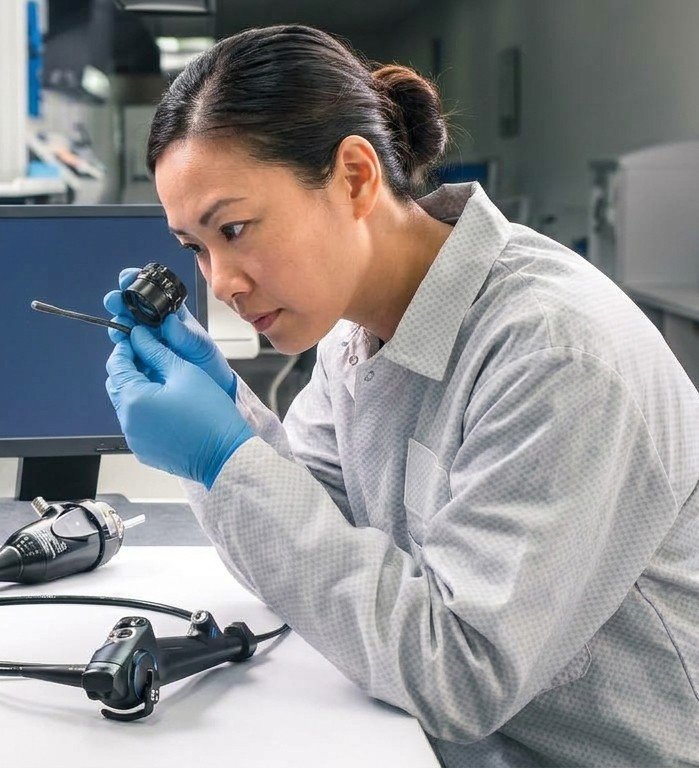
A professional inspection should go much further than checking whether the scope looks clean.
1. Image Quality
Image quality is fundamental to modern endoscopy.
Ask the supplier to demonstrate the equipment and evaluate:
- Image sharpness
- Color reproduction
- Brightness
- White balance
- Image stability
- Video output
- Freeze function
- Zoom or image-enhancement functions, where applicable
If possible, request a live demonstration or video showing the actual equipment you are purchasing.
2. Angulation and Control Functions
The control section should be checked carefully.
Test:
- Up/down angulation
- Right/left angulation
- Control knobs
- Buttons
- Suction control
- Air/water functions
- Remote functions, where applicable
Excessive resistance, unusual looseness, damaged controls, or inconsistent movement can indicate wear or previous damage.
3. Insertion Tube Condition
The insertion tube is one of the most important areas to inspect on a flexible endoscope.
Look for:
- Cracks
- Cuts
- Abrasion
- Flattening
- Unusual stiffness
- Kinks
- Damaged coating
- Signs of fluid ingress
The insertion tube and internal components can experience significant mechanical stress during repeated use. Visual inspection alone may not identify every internal problem, which is why proper technical testing is important.
4. Distal Tip and Optical Components
Inspect the distal end carefully.
Check:
- Objective lens
- Light guide
- Distal cover
- Air/water nozzle
- Working-channel opening
- Physical damage
- Scratches or cloudiness
The distal tip is exposed to repeated manipulation and cleaning procedures, so its condition should be documented.
5. Leak Testing
Leak integrity is critical.
A flexible endoscope should be tested according to the appropriate manufacturer’s/service procedure before being placed into clinical use.
A leak can allow fluid to enter parts of the instrument where it can cause internal damage and potentially compromise safe processing.
Technical inspection guides commonly recommend leak testing and checking for pressure loss or other signs of leakage before finalizing a purchase.
Never rely only on external appearance when buying a flexible endoscope.
6. Working Channel
For scopes with working channels, verify:
- Channel patency
- Suction performance
- Air/water function
- Instrument passage
- Channel condition
- Any evidence of blockage or damage
The working channel is essential for many diagnostic and therapeutic procedures, so it should be included in the technical inspection.
Check the Service History
A professional supplier should be able to explain the equipment’s service history as far as available.
Ask for:
- Previous service records
- Repair history
- Replacement components
- Inspection results
- Leak-test results
- Functional test results
- Serial number
- Model number
- Previous refurbishment information
A supplier that cannot explain what was done to the equipment should be approached cautiously.
Technical buying guidance also recommends asking third-party sellers for maintenance reports, previous repairs, part replacements, and leak-test information.
Compatibility Is Just as Important as Condition
One of the most common mistakes when purchasing refurbished endoscopy equipment is buying a technically good scope that is not compatible with the existing system.
Before purchasing, confirm compatibility between:
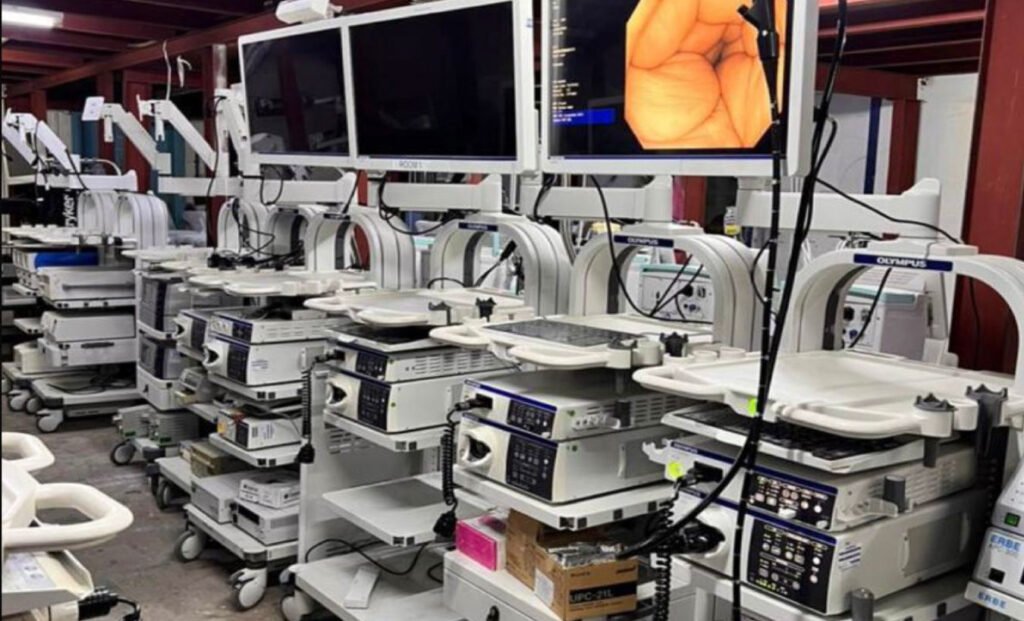
Endoscope → Processor → Light Source → Monitor → Accessories
For example, if a hospital already operates an older video processor, purchasing a scope designed for another generation or platform may create additional costs.
The supplier should confirm:
- Processor compatibility
- Light-source compatibility
- Video output compatibility
- Connector compatibility
- Required accessories
- Software or system requirements where applicable
- Regional electrical requirements
This is especially important when purchasing older or discontinued equipment.
A refurbished system can be excellent value if it fits the facility’s existing infrastructure—but a cheap incompatible component can become an expensive purchase.
Documentation and Regulatory Considerations in the UAE
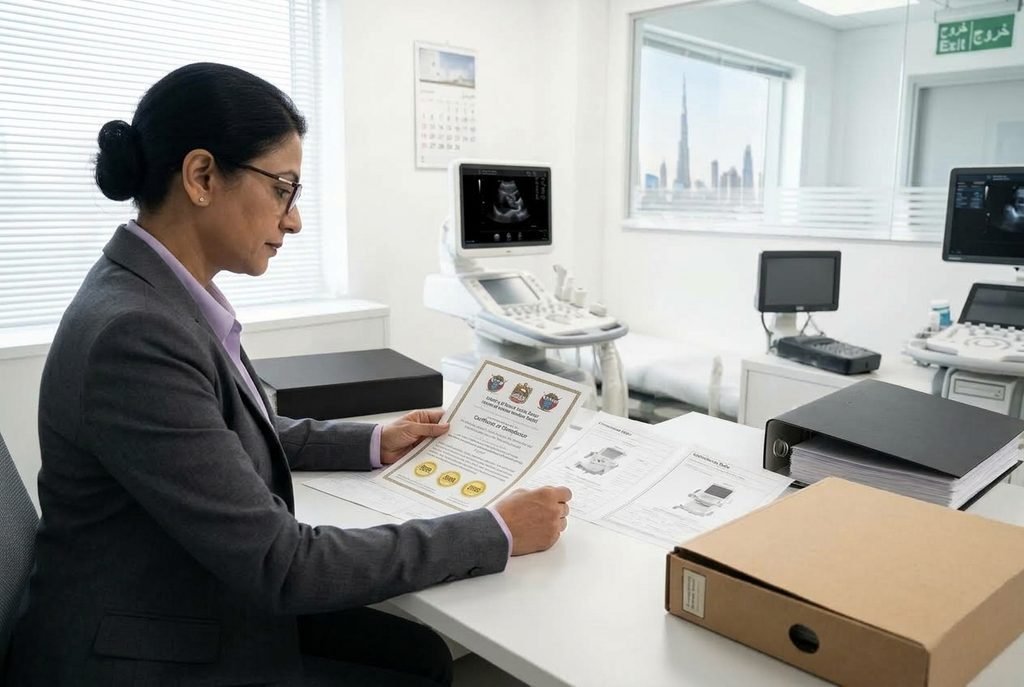
For healthcare providers in Dubai, equipment procurement should be considered as part of the facility’s overall medical equipment management process.
DHA’s medical equipment management standard applies to DHA-licensed healthcare facilities and addresses the full equipment lifecycle, including acquisition, installation, maintenance, inventory, tracking, risk management, and recalls.
DHA also identifies medical device licences/registration documents and medical device maintenance contracts among facility mandatory records.
At the UAE level, MOHAP provides a medical equipment registration service for equipment intended for import and trade in the UAE.
Therefore, UAE buyers should confirm the applicable requirements for the specific equipment, intended use, facility, and transaction before purchasing.
Ask the supplier for relevant documentation such as:
- Product/model information
- Serial number
- Technical specifications
- Service or inspection report
- Warranty terms
- Maintenance information
- User manual
- Compatibility information
- Applicable regulatory documentation
- Import/export documentation where relevant
Important: Regulatory requirements can depend on the device, intended use, emirate, facility type, and transaction. Buyers should verify current requirements with the relevant UAE authority rather than relying solely on a supplier’s statement.
Refurbished Endoscopy Equipment for Hospitals in Dubai and the UAE
Dubai has become an important regional healthcare and medical-equipment market, making reliable equipment sourcing particularly important for hospitals, clinics, diagnostic centers, and medical distributors.
For a Dubai healthcare facility, the decision should not simply be:
“Where can I find the cheapest endoscope?”
A better question is:
“Which supplier can provide the right equipment, in the right condition, with appropriate testing, compatibility information, documentation, and after-sales support?”
This approach can reduce unexpected repair costs and equipment downtime.
For UAE buyers, local availability can also simplify:
- Equipment inspection
- Technical discussions
- Delivery
- Installation
- Maintenance
- Repair coordination
- Spare-part sourcing
- After-sales communication
For larger departments, it can also be useful to discuss the entire equipment requirement rather than buying individual products without considering system compatibility.
Which Refurbished Endoscopy Equipment Can You Buy?
Depending on availability and clinical requirements, refurbished endoscopy equipment can include:
Gastroscopes
Used for upper gastrointestinal examinations and commonly paired with compatible video processors and light sources.
Colonoscopes
Designed for lower gastrointestinal procedures and available in different configurations and generations.
Bronchoscopes
Flexible bronchoscopes may be used for pulmonary and airway applications, depending on the model and clinical requirements.
Duodenoscopes
Specialized equipment used for procedures such as ERCP. Because of their complexity and clinical application, buyers should pay particular attention to inspection, service history, reprocessing requirements, and compatibility.
EUS Equipment
Endoscopic ultrasound systems combine endoscopic visualization with ultrasound imaging and require careful evaluation of both the endoscopic and ultrasound functions.
Video Processors
The processor is a key part of the imaging chain. Buyers should confirm video output, image processing features, compatibility, and condition.
Light Sources
Light sources should be evaluated for illumination performance, operating hours where applicable, output stability, and compatibility with the intended scope.
Refurbished Olympus Endoscopy Equipment
Olympus is one of the most widely recognized names in endoscopy, and refurbished Olympus equipment is commonly considered by healthcare facilities seeking established endoscopy platforms at a lower acquisition cost.
Depending on availability, refurbished Olympus equipment may include systems and scopes such as:
- Olympus 170 systems
- Olympus 180 systems
- Olympus 190 systems
- Olympus 260 systems
- Olympus 290 systems
- GIF gastroscopes
- CF colonoscopes
- PCF colonoscopes
- TJF duodenoscopes
- BF bronchoscopes
- EUS equipment
- CV video processors
- CLV light sources
However, the model number alone should never determine whether an equipment purchase is good.
Two scopes with the same model number can have very different conditions depending on their usage history, maintenance, repairs, and refurbishment quality.
How to Choose a Reliable Refurbished Endoscopy Supplier
Choosing the supplier may be even more important than choosing the equipment.
Look for a supplier that can demonstrate:
Technical Knowledge
The supplier should understand endoscopy equipment rather than simply acting as a general equipment broker.
Transparent Product Information
The listing should clearly identify the model, condition, specifications, included components, and limitations.
Testing and Inspection
Ask exactly what testing was performed.
Warranty or Checking Period
Understand what happens if a technical problem is discovered after delivery.
Repair and Maintenance Support
Endoscopy equipment requires ongoing maintenance. A supplier that can provide technical support can offer considerably more value than a seller offering equipment only.
Real Product Photos and Videos
Ask for photographs and videos of the actual equipment where possible.
Compatibility Guidance
The supplier should be able to determine whether the scope works with your existing processor and accessories.
International Shipping Experience
For international buyers, ask about:
- Packaging
- Shipping arrangements
- Export documentation
- Delivery options
- Customs documentation
- Installation support
- After-sales technical assistance
Red Flags When Buying Refurbished Endoscopy Equipment
Be careful when you see:
“Fully tested” without any explanation of what was tested.
Extremely low pricing without a clear reason.
No serial number or model information.
No service or inspection documentation.
No warranty or checking policy.
Stock photos instead of actual equipment photographs.
No information about leak testing.
No compatibility information.
Pressure to make an immediate payment.
A seller who cannot answer technical questions.
These warning signs are consistent with broader refurbished-equipment buying guidance, which emphasizes process documentation, warranty, realistic pricing, condition grading, and transparency
A Practical Refurbished Endoscope Buying Checklist
Before placing an order, use this checklist:
Product
☐ Correct manufacturer
☐ Correct model
☐ Correct serial number
☐ Appropriate clinical application
☐ Suitable condition
Technical Inspection
☐ Image quality checked
☐ Angulation checked
☐ Insertion tube inspected
☐ Distal tip inspected
☐ Working channel checked
☐ Air/water function checked
☐ Suction checked
☐ Leak test completed
☐ Light transmission checked
Compatibility
☐ Processor compatible
☐ Light source compatible
☐ Monitor/video output compatible
☐ Accessories compatible
☐ Electrical requirements confirmed
Documentation
☐ Service history requested
☐ Inspection report requested
☐ Repair information requested
☐ User manual available
☐ Serial number documented
☐ Warranty terms understood
Supplier
☐ Established supplier
☐ Technical support available
☐ Repair/maintenance support available
☐ Clear quotation
☐ Clear shipping terms
☐ Clear return/checking policy
Is Refurbished Endoscopy Equipment Safe?
The answer depends on how the equipment was refurbished, tested, maintained, and supplied.
A previously used endoscope should not be considered automatically safe simply because it has been cleaned or because it looks visually good.
Proper inspection should address technical performance, physical condition, leak integrity, optical performance, functionality, compatibility, and appropriate reprocessing considerations.
Olympus, for example, states that its certified pre-owned equipment undergoes inspection and a rigorous refurbishment process, including testing intended to identify defects that may not be visible externally.
For healthcare facilities, the right approach is therefore not to avoid refurbished equipment altogether, but to buy refurbished equipment through a controlled and transparent procurement process.
Refurbished Endoscopy Equipment: New Technology vs Better Value
Buying new equipment is not always the only sensible option.
A new system may be appropriate when a facility needs:
- The latest imaging platform
- New manufacturer technology
- New software capabilities
- Full manufacturer support
- Long-term standardization across multiple departments
Refurbished equipment may be attractive when the priority is:
- Controlling capital expenditure
- Expanding an existing department
- Replacing a failed scope
- Maintaining compatibility with an existing system
- Adding additional equipment
- Supporting a new clinic or diagnostic center
- Obtaining established technology at a lower acquisition cost
The best decision depends on clinical requirements, budget, compatibility, service availability, and the condition of the equipment.
Why Buy Refurbished Endoscopy Equipment from Dubai?
For healthcare organizations in the UAE and international buyers sourcing from the region, Dubai can provide access to a broad medical-equipment trading ecosystem.
A Dubai-based supplier can also be useful for buyers who need:
- Endoscopy equipment
- Refurbished Olympus systems
- Gastroscopes
- Colonoscopes
- EUS equipment
- Video processors
- Light sources
- Laparoscopy systems
- Endoscopy repair
- Maintenance
- Rental solutions
- Clinical engineering support
Our website currently provides dedicated categories for Olympus endoscopy systems, flexible scopes, EBUS ultrasound systems, laparoscopy systems, and other medical equipment, alongside endoscopy maintenance, repair, rental, and clinical engineering services.
Refurbished Endoscopy Equipment for International Buyers
The same purchasing principles apply whether you are sourcing equipment in the UAE, Africa, Asia, Europe, the Middle East, or another international market.
Before importing refurbished equipment, confirm:
- Country-specific regulatory requirements
- Electrical specifications
- Compatibility
- Equipment condition
- Documentation
- Warranty
- Shipping arrangements
- Customs/import requirements
- Installation requirements
- Availability of technical support
International buyers should also consider whether local technicians can service the equipment after installation.
A lower purchase price does not necessarily represent better value if replacement parts, repairs, or technical support are difficult to obtain.
Final Thoughts: Buy on Quality, Not Just Price
Refurbished endoscopy equipment can provide hospitals, clinics, diagnostic centers, and healthcare providers with a practical alternative to purchasing entirely new systems.
But the smartest purchase is not necessarily the cheapest one.
The best refurbished equipment purchase combines:
Reliable condition + proper testing + compatibility + documentation + warranty + technical support + trustworthy supplier.
For healthcare facilities in Dubai and the UAE, buyers should also consider applicable regulatory and medical-equipment management requirements before placing equipment into clinical service. DHA’s standards emphasize structured medical-equipment lifecycle management, while UAE medical-device registration requirements may apply depending on the equipment and transaction.
For international buyers, the same principle applies: verify the requirements of your destination country before importing.
At Ambassador Medical Supply / The Ambassador Medical Surgical Equipment and Instruments Trading Co. L.L.C., our Dubai-based business focuses on refurbished endoscopy and laparoscopy equipment, including Olympus endoscopy systems, flexible scopes, EBUS equipment, and related medical technologies, with services covering equipment maintenance, repair, rental, and clinical engineering support.
If you are looking for refurbished endoscopy equipment in Dubai, UAE, or require equipment for an international hospital, clinic, diagnostic center, or medical-equipment distribution project, the right starting point is to discuss your clinical application, existing system, required models, compatibility, and budget before selecting equipment.

Contact us for refurbished endoscopy equipment, availability, technical information, pricing, and worldwide supply inquiries. Dubai, UAE | Worldwide Supply Available
1-Is refurbished endoscopy equipment reliable?
It can be, provided the equipment has been properly inspected, serviced, tested, and supplied by a reputable medical-equipment provider. Buyers should request technical documentation and understand the warranty or checking policy before purchasing.
2-What should I check before buying a refurbished endoscope?
Check image quality, angulation, insertion tube condition, distal tip, working channel, air/water and suction functions, leak integrity, service history, compatibility, and warranty.
3-Is refurbished equipment cheaper than new equipment?
Generally, refurbished equipment can have a lower initial purchase price than equivalent new equipment, but the actual savings depend on the model, condition, availability, refurbishment level, and supplier.
4-Can I buy refurbished Olympus endoscopy equipment?
Yes. Refurbished Olympus endoscopy equipment is available through specialist medical-equipment suppliers. Available models vary according to inventory and market.
5-Can I buy refurbished endoscopy equipment in Dubai?
Yes. Dubai has medical-equipment suppliers offering refurbished endoscopy systems and components. UAE buyers should verify applicable regulatory, documentation, and facility requirements before placing equipment into clinical use.
6-Can refurbished endoscopy equipment be exported internationally?
Yes, depending on the product, destination country, regulatory requirements, shipping arrangements, and import documentation. International buyers should verify their country’s requirements before ordering.
7-Should I buy a complete refurbished endoscopy system or individual scopes?
It depends on your existing equipment. If you already have a compatible processor and light source, purchasing individual refurbished scopes may be sufficient. If you are establishing a new endoscopy department, a complete compatible system may be more practical.